

A sudden car crash on I-35, Mopac, or local roads across Central Texas exerts severe mechanical forces on your lower back. Even at lower speeds, the violent deceleration forces your upper body forward against your seatbelt while your lumbar spine absorbs massive compression and twisting stress.
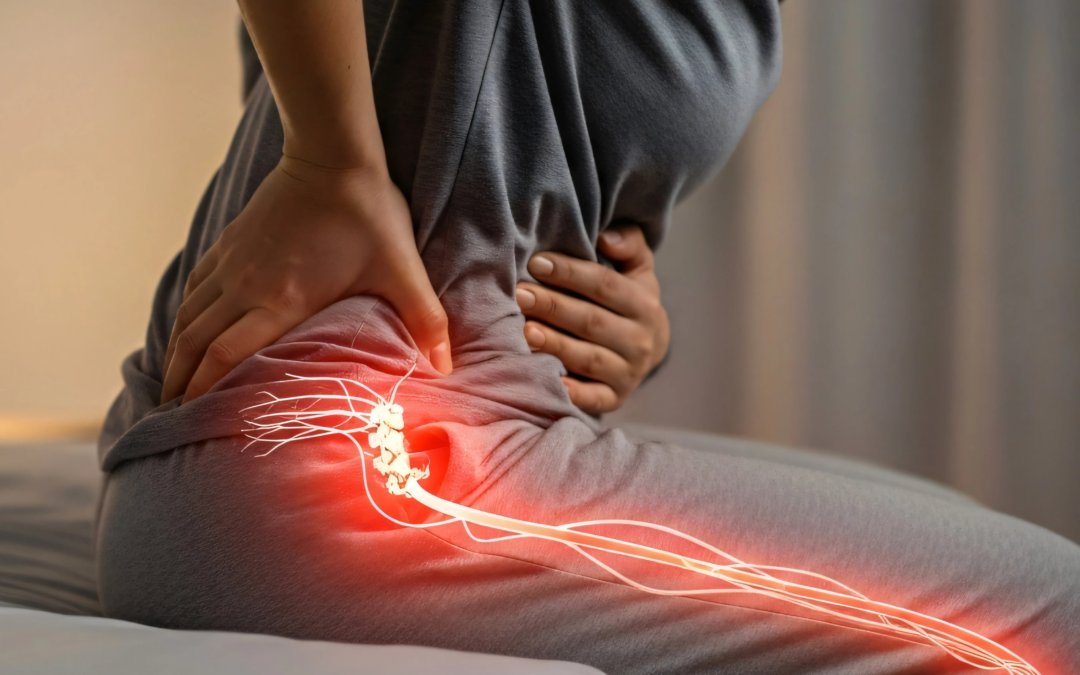
In the days following a vehicle collision, many accident victims notice far more than routine lower back soreness. They develop post-accident sciatica—a sharp, burning, or electric shock-like pain that originates in the lower back and shoots down through the glutes, thigh, calf, and foot.
At Texas Spine & Injury Center, Dr. Aaron Smith, Dr. Shane Davidson, and our expert clinical team specialize in diagnosing post-collision spinal trauma, relieving severe nerve compression non-surgically, and providing meticulous medical-legal documentation to protect both your health and your personal injury claim.
How Motor Vehicle Collisions Cause Sciatica & Disc Herniations
Your lumbar spine relies on rubbery intervertebral discs to absorb impact and allow smooth movement. During an auto collision, severe spinal compression disrupt these vital structures:
-
Disc Bulges & Annular Tears: Violent kinetic energy can tear the outer ring of a lumbar disc, causing the inner gel core to protrude directly into the spinal canal.
-
Direct Nerve Root Compression: The protruding disc gel presses against the nerve roots forming the sciatic nerve (primarily L4, L5, and S1), triggering severe radiating pain.
-
Localized Inflammatory Response: Injured disc tissue releases inflammatory chemical mediators that irritate nearby nerve fibers, causing burning pain, numbness, and severe muscle spasms.
Key Warning Signs of Post-Collision Lumbar Trauma
If you have recently been in a car crash, pay close attention to these clinical indicators of nerve impingement:
- Radiating Leg Pain: Burning, electric sensations travelling from your lower back or buttock down one leg.
- Increased Pain When Sitting or Driving: Sitting places maximum mechanical pressure on lumbar discs, significantly intensifying sciatic nerve pain.
- Numbness, Tingling, or Weakness: "Pins-and-needles" sensations in your foot or toes, or a feeling that your leg might give out when walking.
- Severe Lumbar Muscle Spasms: Deep tightness in the lower back as surrounding muscles lock up to protect damaged spinal joints.
Comprehensive Post-Accident Care & Medical-Legal Records
Attempting to dull post-collision leg pain with over-the-counter painkillers or muscle relaxers only masks underlying structural damage while nerve compression worsens. Active, non-surgical structural care is essential to restore proper alignment and relieve nerve pressure.
Our post-collision clinical protocol includes:
-
Comprehensive Orthopedic & Neurological Exams: Thorough physical evaluations, nerve conduction checks, and diagnostic imaging (X-rays and MRI referrals) to pinpoint precise structural injury.
-
Precision Spinal Realignment & Decompression: Gentle low-force adjustments and targeted spinal decompression widen compressed nerve pathways and help draw protruding disc gel away from nerve roots.
-
Active Rehabilitation & Soft Tissue Therapy: Focused manual therapies reduce painful muscle guarding while targeted core stabilization exercises protect your lower back long-term.
-
Meticulous Medical-Legal Documentation: We maintain complete clinical logs, diagnostic findings, and objective disability tracking to support your personal injury attorney and insurance claims.
Protect Your Spine & Reclaim Your Mobility
Don't let post-accident sciatica turn into permanent nerve damage or chronic mobility loss. Early clinical intervention ensures your lower back heals correctly.