Advanced Biomechanics: Specialized Auto Injury Recovery in South Austin, TX

A car accident occurs in a fraction of a second, but the physical damage left in its wake can impact your daily life for months or years. Whether you experienced a high-speed collision on I-35, a multi-car accident on Ben White Boulevard, or a sudden rear-end impact navigating traffic near Mopac, the violent forces transmitted into the vehicle cabin subject your body to severe physical trauma. In the immediate aftermath, an intense surge of adrenaline frequently masks underlying structural damage. Many drivers leave the scene feeling completely fine, entirely unaware that microscopic tears in their spinal ligaments and structural misalignments have already initiated an intense localized inflammatory response.
At Texas Spine and Injury Center, we provide highly advanced, evidence-based chiropractic care and physical rehabilitation specifically engineered for complex motor vehicle injuries. Serving the South Austin community, our state-of-the-art clinical practice moves completely away from generalized pain management. Under the direction of Dr. Aaron Smith, who holds specialized post-graduate credentials in spinal biomechanical engineering, whiplash, and traumatology, we analyze your injuries with mathematical precision. We isolate the physical root causes of your symptoms to restore structural stability, protect your soft tissues from improper healing, and handle your medical case documentation with complete accuracy.
Clinical Kinematics: Realignment and Soft-Tissue Structural Care
An automobile collision alters normal spinal anatomy. When your cervical or lumbar vertebrae are forced past their normal physiological limits, your body requires specialized structural triage:
1. Advanced Whiplash Traumatology Protocol
During a collision, your head undergoes a violent acceleration-deceleration cycle that tears and overstretches the delicate muscles, tendons, and ligaments of the neck. Our clinical team utilizes precise orthopedic and neurological charting to pinpoint areas of deep soft-tissue damage, treating cervical subluxations early to eliminate persistent tension headaches, dizziness, and radiating shoulder stiffness.
2. Targeted Musculoskeletal Rehabilitation
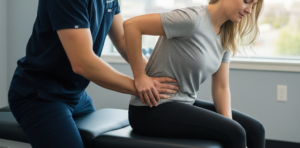
When ligaments are destabilized, the nervous system automatically forces surrounding muscle groups into a state of chronic spasm to splint the joint. We combine gentle, specific spinal adjustments to restore proper joint mechanics with active physical therapy and massage. This structured process breaks down random patches of scar tissue, ensuring your muscles heal with maximum flexibility instead of long-term restriction.
3. Integrated Personal Injury & Medical Documentation
Recovering your physical health shouldn't be derailed by administrative stress. Our clinic features extensive experience navigating the precise documentation timelines required for Texas auto insurance policies, Personal Injury Protection (PIP) claims, and letters of protection (LOP). We maintain clear, legally defensible medical records that accurately outline your diagnosis and care plan, protecting both your health and your legal claim.
Dedicated Treatment Tracks for Post-Collision Trauma
From acute cervical whiplash to deep lower back joint restrictions, our evidence-based treatment plans adapt dynamically to your physical injuries:
| Collision Injury Profile | Primary Biomechanical Deficit | Clinical Rehabilitation Strategy |
| Cervical Whiplash | Stretched or torn neck ligaments; suboccipital nerve compression. | Specific cervical spinal tracking, localized soft-tissue therapy, and neurological balancing. |
| Lumbar Subluxation | Pelvic and lower back joint restrictions causing intense muscular spasms. | Controlled lumbar adjustments to re-establish natural weight-bearing spinal symmetry. |
| Cervical Radiculopathy | Pinched nerve roots in the neck causing radiating numbness or tingling down arms. | Targeted spinal distraction and joint decompression to relieve immediate pressure on nerve pathways. |
The 14-Day Recovery Rule: Following a car crash, your body immediately begins repairing soft tissue tears by laying down a web of rigid scar tissue. Seeking a specialized structural evaluation within the first two weeks ensures that your spine heals in proper, functional alignment rather than a restricted, compensated position that accelerates future disc degeneration.
Stop trying to wait out your post-accident stiffness. Reclaim your mobility today.